
Probiotic
If you’re looking to enter the probiotic supplement industry, partner with FEBICO. We specialize in microalgae, probiotics, functional powder blends, and fermented plant extracts.
The gut is often called the "second brain" of the human body, playing a crucial role not only in digestion, nutrient absorption, and bowel movements, but also in regulating emotions, sleep, immunity, allergies, and even mental health. With growing consumer health awareness, the global probiotic market continues to expand, with increasingly diverse applications making it a prime category for supplement brands to explore.
The Gut-Brain Connection: A Gateway to Whole-Body Wellness
Recent research confirms that the gut and brain communicate bidirectionally via the gut-brain axis, influencing mood, stress response, sleep quality, cognitive function, and metabolic balance. An unhealthy gut microbiome can trigger issues like leaky gut, allergies, poor immunity, and mood disorders — making gut health management essential for overall wellness.
Who Can Benefit from Probiotic Supplements?
1. Infants and young children
2. Busy professionals and high-stress individuals
3. Seniors and the aging population
4. Pregnant and breastfeeding women
5. Those with sensitive digestion or allergy-prone bodies
Popular Product Formats & Market Entry Opportunities
Today’s probiotic products go far beyond digestive health alone — brands are expanding into function-specific probiotic solutions like:
1. Digestive health probiotics
2. Feminine health probiotics
3. Anti-allergy probiotics
4. Weight management probiotics
5. Sleep and relaxation probiotics
6. Skin and beauty probiotics
Product formats range from powder sachets, capsules, and tablets to gummy jellies and probiotic drinks — offering plenty of opportunities for brand differentiation and product innovation.
5 Key Factors for Choosing a Probiotic OEM/ODM Manufacturer
If you’re planning to enter the probiotic supplement market, selecting a reliable manufacturing partner is critical. Here are five essential criteria to consider when choosing a probiotic OEM/ODM factory:
1. Third-Party Certified Raw Materials
The safety and quality of raw materials are the foundation of any product. 3. Every ingredient should come with complete test reports, including pesticide residue, plasticizers, heavy metals, moisture, microbial count, appearance, and a COA (Certificate of Analysis) to ensure thorough quality control.
2. Customizable Formulation Options
Today’s probiotics go beyond gut health, expanding into categories like sleep support, beauty, and weight management. A capable OEM/ODM partner should offer customized formulations tailored to unique market demands and target consumers, adjusting ingredient combinations and flavors to develop innovative, market-ready products.
3.Low-Temperature Granulation Technology
Powder sachets are one of the most popular probiotic formats. Granulation enhances solubility, palatability, and stability. Low-temperature fluid bed granulation preserves probiotic viability by avoiding heat damage, ensuring maximum efficacy.
4.Certified, Hygienic Production Environment
Spore-forming probiotics (like Bacillus species and natto bacteria) are highly resistant to environmental stress. Inadequate cleaning after production could risk contamination of subsequent batches. It’s important to partner with a manufacturer that holds proper certifications and operates under standardized, validated cleaning protocols to ensure product safety.
5.Finished Product Quality Testing
Final products should undergo rigorous testing for active ingredients, probiotic counts, and stability before leaving the factory. This ensures that the probiotics remain effective and perform as promised after consumption.
Common Probiotic Supplement Formats
When it comes to probiotic supplements, popular product formats on the market include capsules, tablets, powders, liquid sachets, and jellies. Among these, capsules and powder sachets remain the mainstream choices. Here’s a breakdown of each format’s characteristics and key considerations for contract manufacturing:
Capsules
No need for flavoring, with relatively fewer excipients. Simple production process helps preserve probiotic viability. Important Note: Ensure excellent capsule sealing and moisture-proof packaging to prevent humidity and spoilage.
Tablets
The compression process during tablet-making may reduce probiotic survival rates. Most probiotic tablets on the market are lozenges designed for oral health rather than digestive care.
Powder Sachets
Sealed powder packaging better preserves probiotic stability. Offers higher dosage capacity and flexible formulations. Easier to consume for children and the elderly compared to capsules and tablets.
Liquid & Jelly Formats
Convenient ready-to-drink liquid sachets and jellies have gained popularity in recent years. However, probiotics tend to be less stable in liquid environments. Pro Tip: Consider using heat-resistant postbiotics and prebiotics as key ingredients for improved shelf stability.
- Related Product

Mind and gut balance probiotics
2g powder sachet x 30 sachets per box
A unique functional powder blend combining probiotics, prebiotic fiber, and plant-based nutrients to support digestive health, gut flora balance, and overall...
Details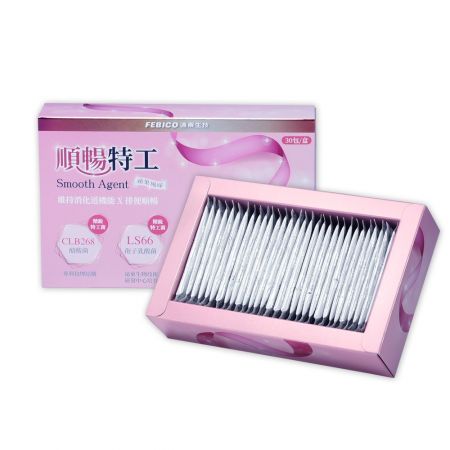
Smooth Agent
2g powder x 30 packs per box / 2g powder x 3 packs per sample box
The combination of Clostridium Butyricum CLB268 and Bacillus Coagulans LS66 forms a complex. Both CLB268 and LS66 are capable of traversing the digestive...
Details