
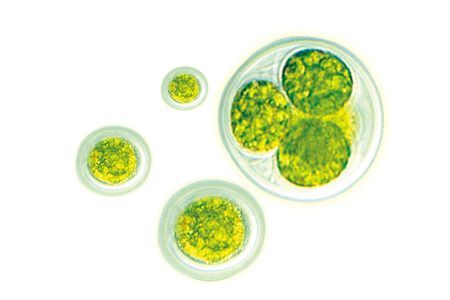
Chlorella Extracts and Chlorella Growth Factor: Technical Overview
Definitions, Process Variables and Analytical Boundaries
Chlorella extract is a broad term for fractions obtained from chlorella biomass through water-based or other extraction processes. Chlorella Growth Factor (CGF) is a legacy commercial term commonly used for selected water-soluble chlorella extracts; it is not a single chemically defined molecule. The composition of an extract depends on the chlorella strain, cultivation conditions, biomass quality, extraction temperature and time, solid-liquid separation, concentration, drying and storage.
What the Term CGF Describes
CGF generally describes a chlorella-derived extract or concentrate rather than one purified active substance. Products marketed under the same term may differ in source biomass, manufacturing process, concentration basis, physical format and analytical specification.
Why Product Identity Must Be Grade-Specific
Meaningful comparison requires the exact product grade, test method, sample preparation, units and acceptance criteria. A name such as CGF, chlorella extract or nucleotide-rich extract does not establish equivalence between suppliers or between a commercial ingredient and a material used in a published study.
Hot-water extraction can transfer a mixture of water-soluble and dispersible components from chlorella biomass into the extract. Depending on the process and analytical method, the resulting material may contain nucleic-acid-related compounds, peptides and amino acids, soluble carbohydrates, minerals and other low-molecular-weight components. Presence and concentration should be confirmed by product-specific testing rather than inferred from the CGF name.
Key Technical Evaluation Points
- Source species or strain, cultivation conditions and biomass traceability
- Extraction temperature, time, solid-to-liquid ratio and water quality
- Clarification, filtration, concentration, drying and storage conditions
- Physical format, moisture or solids basis and microbiological specification
- Analytical method, units, sample preparation and grade-specific acceptance criteria
- Intended application, processing conditions and destination-market requirements
FEBICO currently identifies selected commercial chlorella extract grades by optical density measured at 260 nm. Absorbance at 260 nm is sensitive to nucleic-acid-related chromophores, but the result can also be influenced by dilution, pH, ionic strength, turbidity and other UV-absorbing components. OD260 is therefore a grade identifier under a defined test method; it is not, by itself, a direct measurement of total nucleotides, DNA, RNA, spermidine or biological activity.
Evidence and Claim Boundaries
Published studies may use whole chlorella, cell-wall-disrupted biomass, a specific strain, a partially characterized extract or a purified fraction. Results should not be transferred automatically to a commercial CGF grade. Health, cosmetic or functional claims require product-specific evidence and destination-market regulatory review.
Related FEBICO Ingredient
For powder and liquid formats, grade identifiers, documentation, sample review and commercial project discussion, see the related FEBICO Chlorella Extracts B2B ingredient page.
Source Reference
- Safi C, Zebib B, Merah O, Pontalier PY, Vaca-Garcia C. Morphology, composition, production, processing and applications of Chlorella vulgaris: A review. Renewable and Sustainable Energy Reviews. 2014;35:265-278. https://doi.org/10.1016/j.rser.2014.04.007
- Wilfinger WW, Mackey K, Chomczynski P. Effect of pH and ionic strength on the spectrophotometric assessment of nucleic acid purity. BioTechniques. 1997;22(3):474-481. https://doi.org/10.2144/97223st01
- Related Product
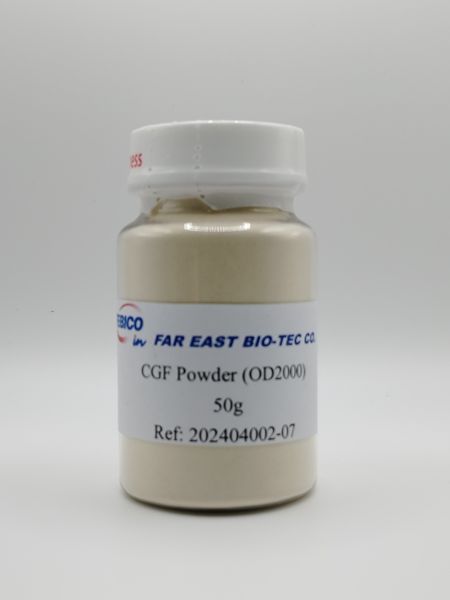
Chlorella Extracts for B2B Product Development
Explore FEBICO chlorella-derived extract ingredients in powder and liquid formats for B2B technical evaluation, sourcing and formulation discussions. The current...
Details